
Touch for the Overheld: Why Your Body Is Asking for Slower Hands
How inflammation lives in the places we've been bracing, and what happens when we finally let someone else hold the weight.
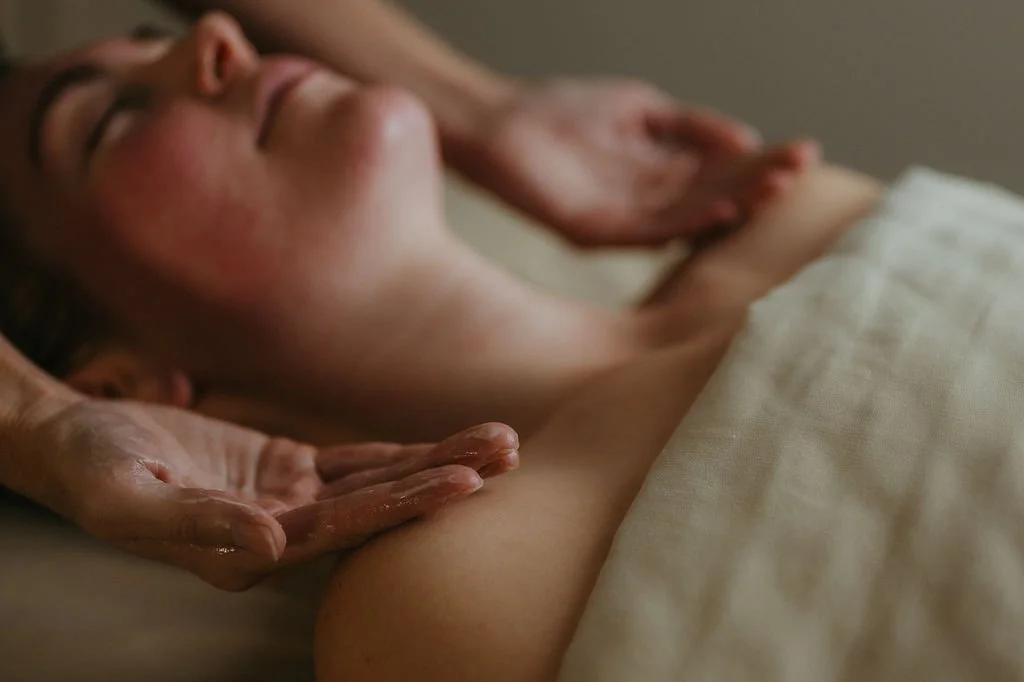
There's a kind of tension that doesn't announce itself.
It doesn't scream. It whispers. It lives in the space between your ribs where your breath has become shallow. In the chronic ache along your shoulder blade that you've learned to ignore. In the way your low back seizes after a long day of sitting, standing, holding it all together.
This tension has a name: chronic muscular bracing. And for so many of us, it's become the baseline. The new normal. The way our bodies have learned to exist in a world that asks us to be perpetually on.
But here's what most people don't realize: that holding pattern isn't just tight muscles. It's inflammation. It's fascia that's been compressed for so long it's forgotten how to glide. It's a nervous system that's been running in override mode, waiting for a signal that it's finally safe to stop.
And that signal? It often comes through touch.
Not quick touch. Not fix-it touch. Slow, intentional, presence-based touch that tells your body: you can put it down now.
A note from Jennalee
I used to think I had "bad shoulders."
That's how I described it to bodyworkers, chiropractors, anyone who put their hands on me: "My shoulders are always tight. It's just how I'm built."
Except it wasn't how I was built. It was how I'd been living.
The first time someone worked on me slowly, without agenda, without trying to force the tissue to change, I felt something I didn't expect: grief. Not sadness, exactly. More like the accumulated weight of months of holding finally having somewhere to go.
The practitioner didn't say much. She just stayed. Held the tissue. Breathed with me. Waited for my body to trust enough to soften.
By the end of the session, my shoulders had dropped two inches. But more than that, I understood something essential: my body had been asking for permission. Permission to stop guarding. Permission to be held instead of doing all the holding.
This June, we're dedicating the entire month to that kind of touch. The kind that doesn't rush. The kind that meets chronic inflammation not with force, but with presence. The kind that gives the overheld body what it's actually been asking for.
If you've been carrying the weight of your life in your tissues, this month is for you.
— Jennalee, Founder

Why June asks us to slow down
June arrives with a strange paradox.
The days are longer. The light lingers. Summer whispers its promises of ease and expansiveness.
And yet, for so many of us, the body feels anything but easy. It feels clenched. Compressed. Like we've been bracing for so long that we've forgotten what it feels like to fully exhale.
This is the month to let someone else hold you.
Not metaphorically. Literally. With skilled hands that understand where inflammation lives in the body and how to invite it to release without force.
Because here's the truth most wellness culture won't tell you: you can't think your way out of chronic tension. You can't productivity-hack your way out of fascial restriction. You can't will your nervous system into parasympathetic rest.
But you can be touched in a way that invites it.
Where inflammation actually lives..
When we think about inflammation, we often picture acute injury: the swollen ankle, the red skin, the obvious pain.
But chronic inflammation lives differently in the body. It's quieter. More insidious. It shows up as:
That knot between your shoulder blades that never fully releases
The persistent ache in your low back that gets worse when you're stressed
The tightness in your jaw that you only notice when someone points it out
The headaches that start at the base of your skull
The feeling that your whole body is slightly compressed, like you're wearing armor you can't take off
This isn't happening in isolation. It's a full-system response.
Chronic stress creates chronic muscular bracing.
When your nervous system perceives threat (real or imagined, acute or ongoing), it prepares your body to fight or flee. Muscles contract. Fascia tightens. Blood flow redirects. The body armors up.
In short bursts, this is adaptive. Lifesaving, even.
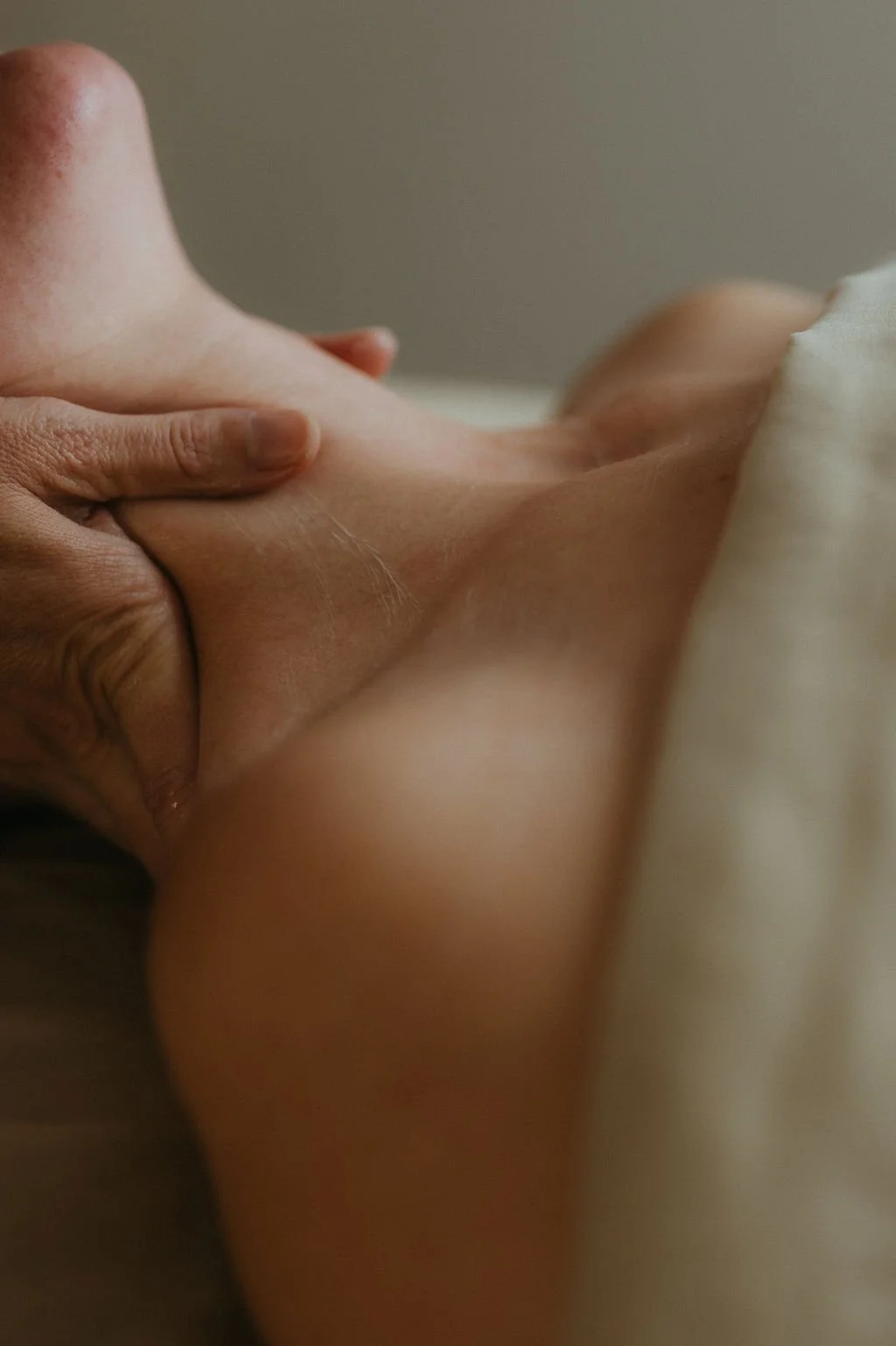
But when it becomes your baseline, when your body never gets the signal that the threat has passed, that bracing becomes inflammation. The fascia, that connective tissue web that surrounds every muscle, organ, and nerve in your body, starts to adhere. To lose its glide. To create restrictions that pull on other parts of the system.
You end up with pain that moves. Tension that migrates. A body that feels perpetually tight no matter how much you stretch, strengthen, or "optimize."
Because you're not addressing the root: a nervous system that hasn't been given permission to discharge.
Why slow touch changes everything
Here's where massage becomes medicine.
Not the kind that's rushed. Not the "deep tissue" that leaves you bruised and more guarded than before. Not the spa massage that's pleasant but doesn't actually land.
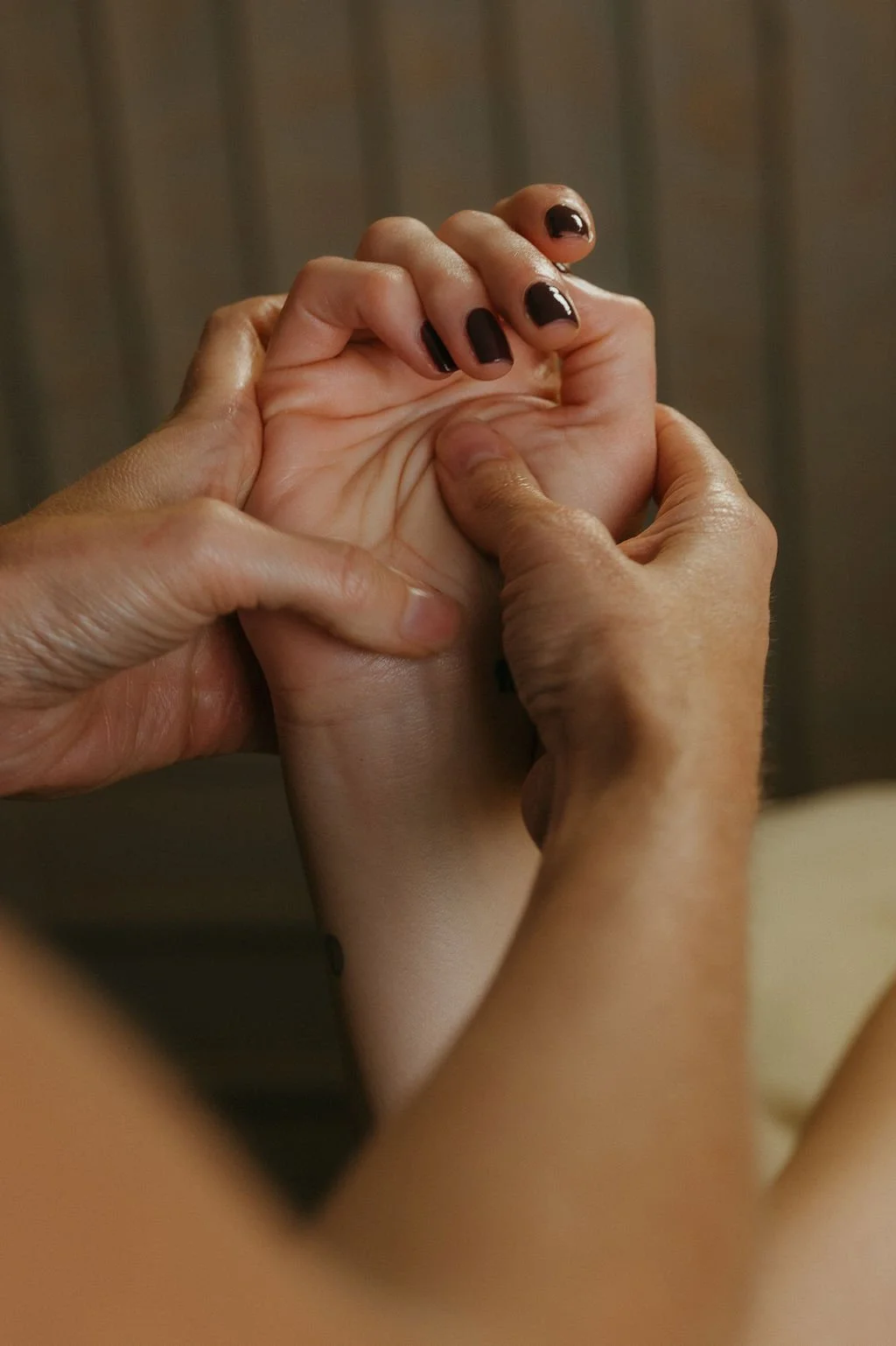
Slow, intentional, nervous-system-informed touch that meets your body exactly where it is.
When someone works slowly, something fundamental shifts:
The body stops defending.
Fast, aggressive touch signals danger. Slow, present touch signals safety. Your nervous system reads the tempo before your mind does.
The fascia has time to respond.
Fascia doesn't release on command. It releases when it feels safe enough to soften. That takes time. Presence. Sustained pressure that invites rather than forces.
The breath changes.
When the nervous system downshifts, your breath naturally deepens. And when the breath deepens, everything else follows: circulation improves, inflammation decreases, the parasympathetic system finally comes online.
The inflammation has somewhere to go.
Chronic tension isn't just "tightness." It's accumulated metabolic waste, restricted lymph flow, tissues that haven't been able to properly drain. Slow bodywork combined with warmth creates the conditions for actual clearing.
This is why we pair massage with infrared at Yoso. Warmth softens the tissue. Touch guides the release. Sound and aromatherapy anchor the nervous system in safety.
Together, they create a sensory experience that your body reads as: you can stop holding now.
The hero: 90-Minute Massage Ritual
This month, we're massaging the absolute center.
Not as a luxury. As a necessity for bodies that have been overheld, over-functioning, and under-resourced.
What makes our approach different:
Customized to your holding patterns
We don't follow a script. We follow your tissue. Where is it guarding? Where is it asking for attention? What does your nervous system need right now to feel safe enough to let go?
Infused with sensory anchors
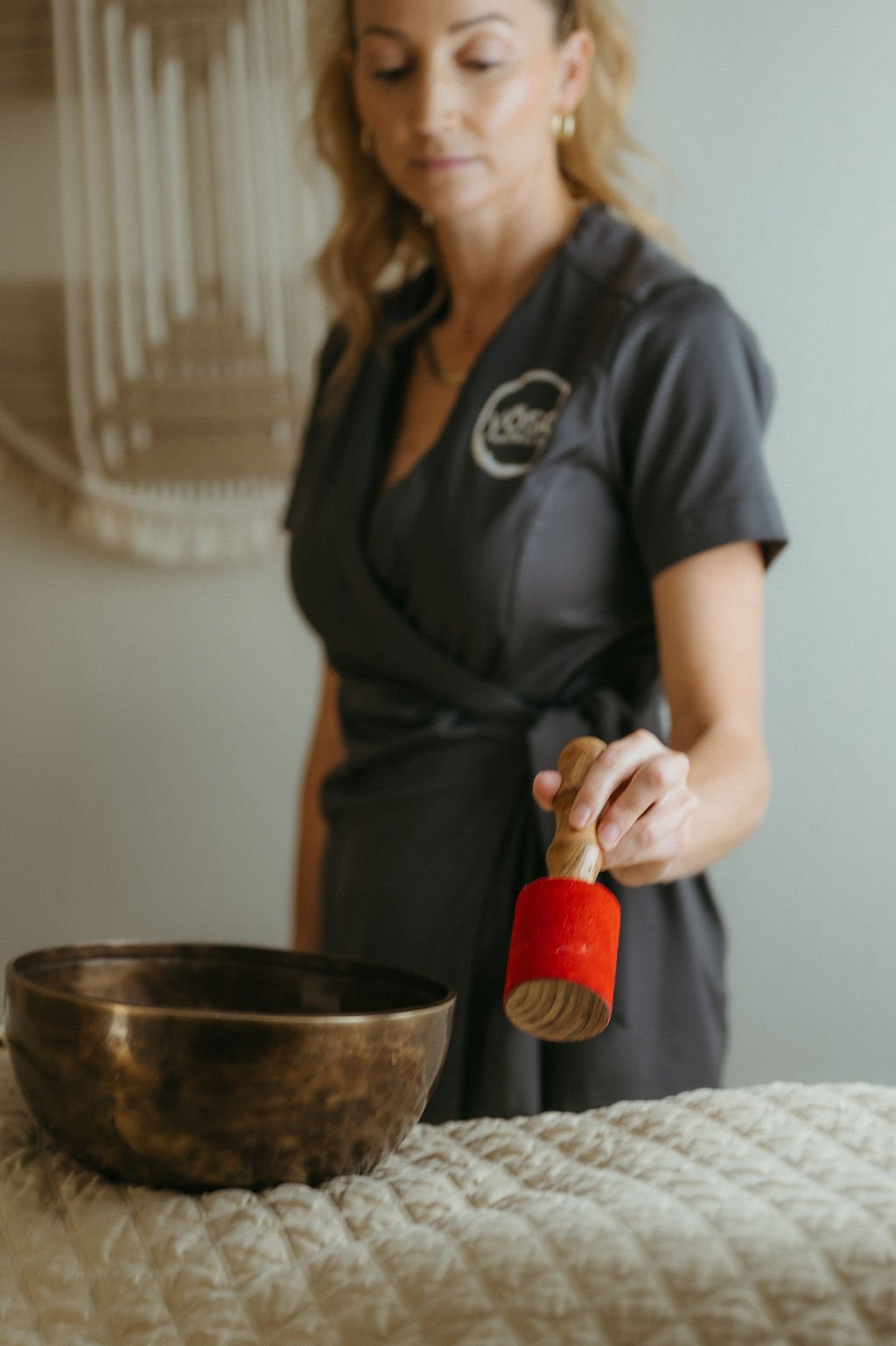
Sound bowl vibrations, warm compresses, and our proprietary oil blends aren't "nice additions." They're deliberate tools to help your nervous system orient to safety and presence.
Paced for actual release
90 minutes gives us time to work slowly. To let the tissue respond. To address not just the symptom (tight shoulders) but the pattern (chronic bracing in response to stress).
Preceded by warmth when needed
For bodies that are deeply guarded, we often recommend starting with an infrared sauna. Heat creates pliability. It prepares the nervous system. It makes hands-on work exponentially more effective.
This isn't just a massage. It's ritual therapy for the chronically braced.
Real stories from the table
We hear it constantly:
"I didn't realize how much pain I was in until it wasn't there anymore."
"I've been to so many massage therapists, but this is the first time I felt like my body actually changed."
"I cried on the table and I don't even know why. I just... needed to."
One client, a healthcare worker in her late thirties, described her first 90-minute session this way:
"I came in thinking I just had tight shoulders. But as she worked, I realized: I've been holding my entire nervous system in my upper back. Every patient interaction, every crisis, every time I had to show up when I was depleted. It's all been living there.
When she finally released it, I felt like I could breathe in a way I haven't in years. Like my rib cage remembered how to expand. It wasn't just physical. It was like my whole system exhaled."
That's what we mean by "touch for the overheld." It's not about fixing. It's about finally having space to release what you've been carrying.
The full spectrum of release: All of June's rituals
While massage is our main focus this month, we know that different bodies need different pathways to release. Here's the full menu of what we're holding space for:
The Sweat Ritual: Full-Spectrum Infrared Sauna
More than a sweat. This is cellular cleansing. Infrared light penetrates deep into tissues, encouraging detoxification, pain relief, improved circulation, and emotional release. For bodies that need to warm and soften before they can be touched.
The Flow Ritual: Lymphatic Drainage
Full-body treatment using BallancerPro technology. A cutting-edge compression system designed to stimulate lymphatic flow, reduce puffiness, and flush metabolic waste. For bodies that feel stuck, swollen, or congested.
The Ground Ritual: Ionic Foot Detox + BrainTap Meditation
A subtle but powerful ritual that invites release through the feet. The ionic foot bath draws out impurities while rebalancing the body's energetic charge, offering visible feedback in the shifting color and sediment of the water. Paired with guided meditation for nervous system regulation.
For those wanting to layer modalities, we offer thoughtfully designed pairings:
Lymphatic + Facial: Drain, then restore
Infrared + Massage: Warm, then release
Infrared + Acupuncture: Heat, then rebalance
Ionic Foot Detox + Facial: Ground, then glow
Your practitioner can guide you to the combination best aligned with your body's needs right now.
How to support your body after deep release
Here's what most people don't tell you: after significant bodywork, your system needs support to integrate.
The inflammation that's been released needs somewhere to go. The nervous system that's been discharged needs time to recalibrate. The tissues that have softened need proper hydration and rest to reorganize in a new pattern.
In the 24-48 hours after your session:
Hydrate intentionally: Water with electrolytes, mineral-rich herbal tea, bone broth. Your lymph needs fluid to clear what's been mobilized.
Move gently: Walking, easy stretching, nothing aggressive. Movement helps circulation without re-creating the bracing pattern.
Rest without guilt: Your body just did significant work. Honor that. Early bedtime, minimal screen time, saying no to things that can wait.
Warmth: Epsom salt baths, heating pads, warm layers. Warmth continues the softening process.
Notice without fixing: You might feel emotional. Tired. Unusually clear. Let it be information, not something you need to manage.
This is integration. It's as important as the session itself.
The invitation
June is the month your body finally exhales.
Not because you've earned it. Not because you've optimized enough or worked hard enough or held it together long enough.
Because your nervous system needs the signal that it's safe to stop bracing. And that signal comes through touch.
Book the 90-minute massage. Add the infrared if your body is deeply guarded. Layer in lymphatic drainage if you're feeling stuck or swollen. Choose the combination that speaks to where you are right now.
And then let yourself receive.
Not perform. Not produce. Not prove. Just receive.
The body that's been holding everything deserves to be held.
Book your June ritual at Yoso
Featured This Month:
90-Minute Massage Ritual: Custom bodywork with sound bowl therapy, warm compresses, and aromatic oils
Perfect for: chronic tension, holding patterns, nervous system reset
Infrared + Massage Journey: Full-spectrum sauna followed by therapeutic massage
Perfect for: deeply guarded tissue, chronic pain, need for full system reset
The Flow Ritual: BallancerPro lymphatic drainage
Perfect for: inflammation, puffiness, feeling stuck or stagnant
Combo Journeys: Customized pairings designed for your body's current needs
Your practitioner will help you choose
Yoso Wellness
Santa Cruz, California
First-time clients receive a complimentary consultation to design the ritual that matches your body's current needs.
📍 740 Front St Suite 110, Santa Cruz, CA 95060
📞 (831) 600-8053
Hours: Monday–Thursday: 9:30 AM–7 PM
Friday–Saturday: 9:30 AM–5 PM
Sunday: Closed
Follow us on Instagram for daily wellness tips, lymphatic drainage techniques, and seasonal self-care rituals.
Because the body that holds everything deserves to be held too.